
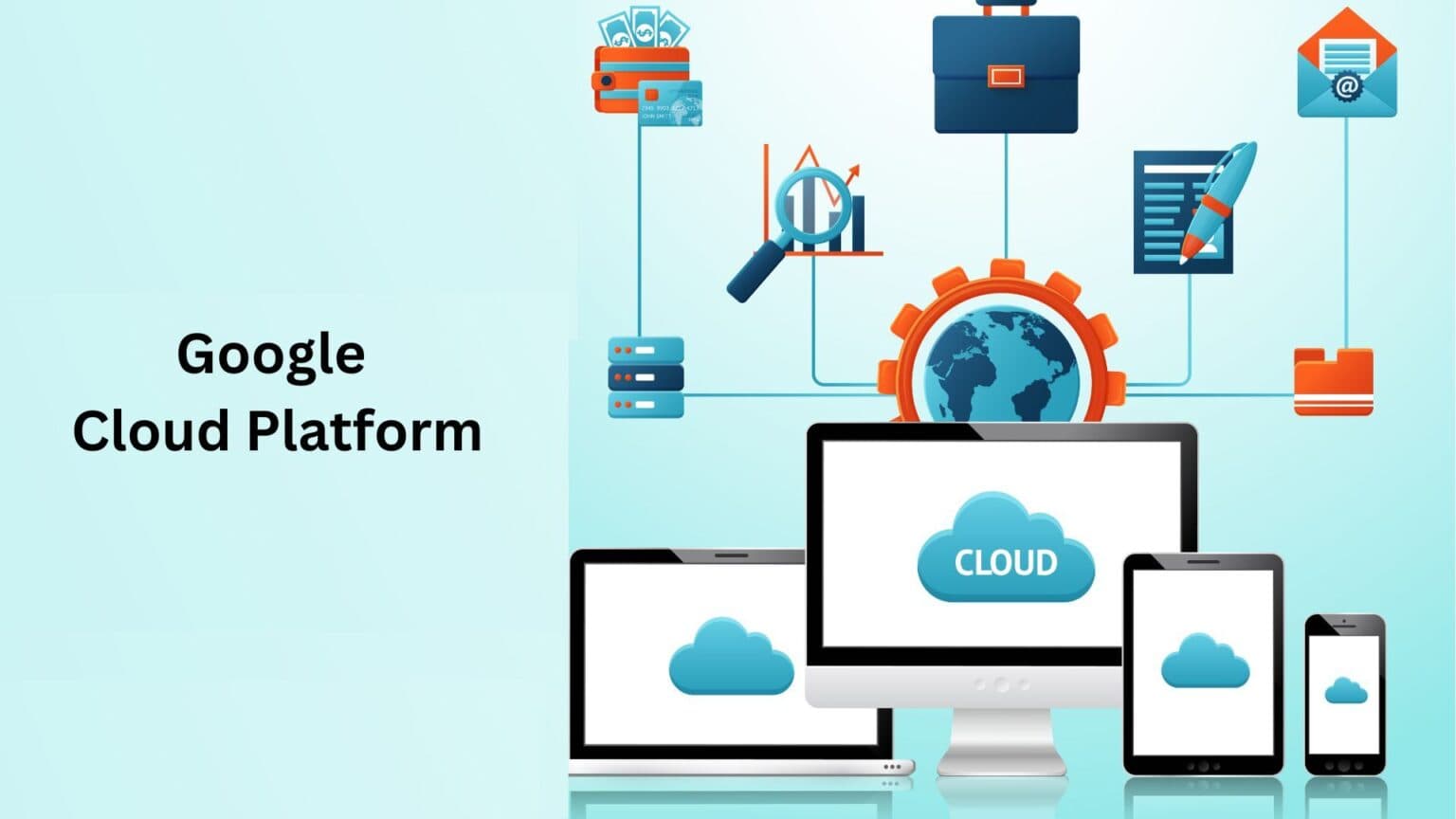
Google Cloud Platform (GCP) is Google’s cloud computing suite that provides a wide range of services such as computing power, storage, databases, networking, machine learning, and data analytics. Commonly searched terms like GCP full form, GCP meaning, and what is Google Cloud Platform refer to this public cloud solution that helps businesses build, deploy, and scale applications efficiently.
Used by startups as well as large enterprises, GCP leverages Google’s secure, high-performance global infrastructure to support modern digital workloads and innovation.
What Is Google Cloud Platform (GCP)?
GCP Full Form and Meaning
GCP is a public cloud service provider that offers on-demand access to computing resources hosted in Google’s worldwide data centers. These resources can be used under a free tier or on a pay-as-you-go pricing model, making GCP suitable for businesses of all sizes.
With Google Cloud Platform, organizations can manage costs while delivering websites, video content, AI workloads, and machine-learning applications at scale.
Like its competitors Amazon Web Services (AWS) and Microsoft Azure—GCP provides virtual machines, networking, storage, VPN connectivity, machine learning tools such as Tensor Processing Units (TPUs), and SaaS offerings. While the underlying cloud technologies are similar across providers, GCP differs in areas like pricing structure, service design, and support experience.
History of Google Cloud Platform
The origins of GCP date back to 2008 with the launch of Google App Engine, a platform designed to simplify web application development and automatically scale applications running on Google’s infrastructure.
Initially released as a preview to around 10,000 developers, App Engine evolved based on user feedback and became an officially supported Google product in 2011. Over the years, Google expanded its cloud offerings by adding new services and integrating advanced tools, shaping what is now known as Google Cloud Platform.
Today, GCP is trusted by global organizations such as eBay, UPS, and Twitter, demonstrating its flexibility and adoption across industries.
Difference Between Google Cloud and Google Cloud Platform
Google Cloud is an umbrella term that includes multiple cloud-based products and services offered by Google. These services help organizations transition to digital-first operations.
Google Cloud Platform, on the other hand, is the infrastructure-as-a-service (IaaS) and platform-as-a-service (PaaS) component of Google Cloud, focused on hosting and running web-based applications.
Other Google Cloud offerings include:
- Google Workspace (formerly G Suite): Email, collaboration tools, and identity management
- Enterprise Android and Chrome OS: Operating systems for mobile and desktop devices
- APIs and AI services: Machine learning, mapping, and enterprise APIs for software integration
GCP serves as the backbone for many of these services, providing the core infrastructure.
Core Google Cloud Platform Services
Google Cloud Platform services are broadly categorized into:
- Computing and hosting
- Networking
- Storage and databases
- Machine learning and AI
- Big Data and analytics
GCP Infrastructure: Regions, Zones, and Pricing
Google Cloud Platform operates across 24 global locations. Each region consists of multiple zones, which are isolated from each other to prevent single points of failure.
- Global resources (e.g., HTTP load balancers) are accessible worldwide
- Regional resources (e.g., cloud storage) are replicated across zones for redundancy
- Zonal resources (e.g., compute instances) exist within a single zone
Choosing the right region and zone is critical for performance, reliability, scalability, and compliance.
GCP Pricing Model
GCP pricing varies based on factors such as CPU type, memory configuration, and usage duration. Improper resource sizing or lack of monitoring can significantly increase costs. Using the Google Cloud Pricing Calculator and assigning cost ownership are essential for effective budget management.
New users receive $300 in free credits, after which billing switches to a pay-as-you-go model.
Key Products and Services Offered by GCP
App Engine
A fully managed platform for building and hosting web applications that automatically scale based on traffic, without managing servers or containers.
Compute Engine
Provides customizable virtual machines with various operating systems and hardware configurations. Similar to Amazon EC2, it allows users to start and stop VMs as needed to optimize costs.
BigQuery
A serverless, enterprise-grade data warehouse capable of analyzing massive datasets using standard SQL. It can process terabytes to petabytes of data within minutes.
Cloud Memorystore for Redis
An in-memory data store optimized for high-performance workloads where speed is critical, such as caching and real-time analytics.
Tensor Processing Units (TPUs)
Custom processors built for large-scale machine-learning computations, particularly for neural networks and AI workloads.
Persistent Disk
Durable block storage for virtual machines that supports resizing, backups, encryption, and multi-reader access.
Cloud Run
A serverless container platform that allows you to run containers without managing virtual machines, reducing complexity and operational overhead.
GCP Technical Support
Google Cloud Platform offers multiple support tiers:
- Free self-service support via documentation, forums, and community channels
- Paid plans with 24/7 phone support and optional dedicated account management
Strengths and Limitations of Google Cloud Platform
Strengths
- Modular, integrated services that work seamlessly together
- High-quality documentation with clear explanations and practical examples
- Global backbone network offering fast, reliable, and scalable connectivity
Limitations
- Smaller service catalog compared to AWS and Azure
- Developer-focused design, which may present a learning curve for non-technical users
Real-World Use Cases of GCP
Organizational and Access Management
GCP’s structured hierarchy supports large enterprises by simplifying permissions and governance across multiple projects.
Resource and Cost Management
All resources are tied to projects, making cleanup and cost control easier. Projects can also be linked to different billing accounts for financial tracking.
Advanced Data and Analytics
GCP enables businesses to analyze large datasets, derive actionable insights, and build machine-learning models for personalization, forecasting, and optimization.
Conclusion
Understanding Google Cloud Platform helps organizations adopt scalable, flexible, and cost-efficient cloud solutions. With strong capabilities in data analytics, AI, and infrastructure management, GCP supports innovation and operational efficiency. Learning GCP and pursuing relevant certifications can further help professionals and businesses unlock its full potential.